Services

Forestry Mulching in Wingate, NC

An overgrown field doesn’t stay a field for long in the Carolina Piedmont. Leave pasture or a back lot alone for a few seasons and it fills in with eastern red cedar, sweetgum, briars, and Chinese privet so thick you can’t walk through it. ETG Landwork provides forestry mulching in Charlotte and across Union County. It clears brush and small trees in a single pass and leaves the shredded material on the ground as a protective layer, with no burn piles, no dump fees, and no bare red clay washing toward the neighbor’s yard after the next storm. From horse property near Waxhaw to wooded lots in Mint Hill, we open up land you haven’t been able to use in years.

  • Free Estimates
  • Owner-Operated
  • Residential & Commercial Projects
01 / 5

What Forestry Mulching Actually Involves

Forestry mulching is a land clearing method that cuts, grinds, and spreads vegetation in one operation using a single machine. The core tool is a mulching head: a heavy steel drum fitted with carbide or hardened-steel teeth, mounted on the front of a compact track loader and driven by the loader’s high-flow auxiliary hydraulics. The operator walks the spinning drum into standing brush and saplings, grinding trees from the top down to ground level. Stumps are ground to roughly grade, and the chips are thrown against the housing and dropped back onto the ground as a mat of mulch. Loader-mounted mulchers typically handle trees up to about 6 to 8 inches in diameter at steady production. Larger trunks are felled first and then processed or hauled.

One detail matters for what you plan to do next: mulching removes everything above ground, but the root systems stay in the soil. That makes it ideal for pasture reclamation, fence lines, trails, underbrush removal, and view corridors, but not for building sites, which need full grubbing. The result is open, walkable ground covered in a layer of mulch that holds soil in place and suppresses new growth.
02 / 5

Our Forestry Mulching Process

  1. Step 1: Walk the Property and Flag What Stays

    Luis walks the area with you and flags trees to keep, fence lines, wells, septic areas, and anything buried or hidden in the brush. He checks tree sizes, slopes, and wet ground to confirm mulching is the right method, or whether some areas need traditional clearing instead. You get a written estimate that defines the boundaries and the result you can expect. That clarity is how you avoid paying for acreage you didn’t need touched.

  2. Step 2: Clear Obstacles and Mark Hazards

    Before the mulcher runs, we mark old wire fencing, rock outcrops, metal debris, and anything else that could damage the drum or be thrown by it. Hazards are common on former farmland in Union County, where old fence lines are often swallowed up by growth. Sites with large trees get those felled and set aside first. This prep keeps the job moving and keeps the teeth in the ground instead of in the repair shop.

  3. Step 3: Mulch the Vegetation in Place

    The mulcher works through the area in overlapping passes, taking brush, vines, privet, cedars, and small hardwoods down to ground level. Trees you flagged are worked around carefully so their trunks and lower limbs stay intact. The mulch lands where the vegetation stood, so there’s nothing to pile, burn, or truck away. Most properties change dramatically within the first few hours.

  4. Step 4: Final Pass, Walkthrough, and Regrowth Plan

    We make a final pass to even out the mulch layer and knock down any stubs left standing above grade, then walk the property with you. We’ll point out species that are likely to resprout, since sweetgum and privet in particular come back from their roots, and talk through follow-up options such as periodic forestry mowing. You leave with open, usable land and a realistic plan to keep it that way.

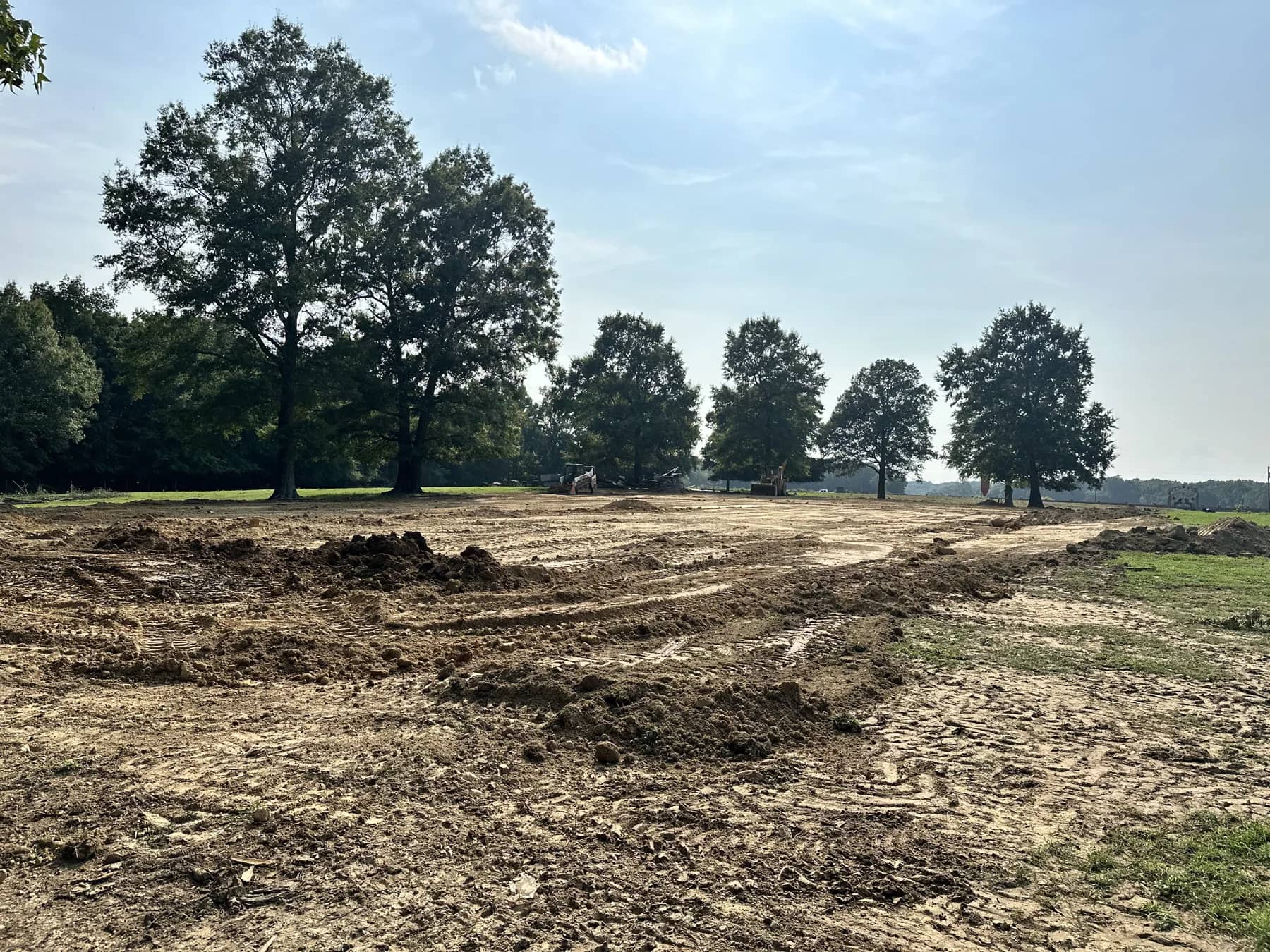
Land clearing result: open, graded acreage with exposed soil and mature trees left standing
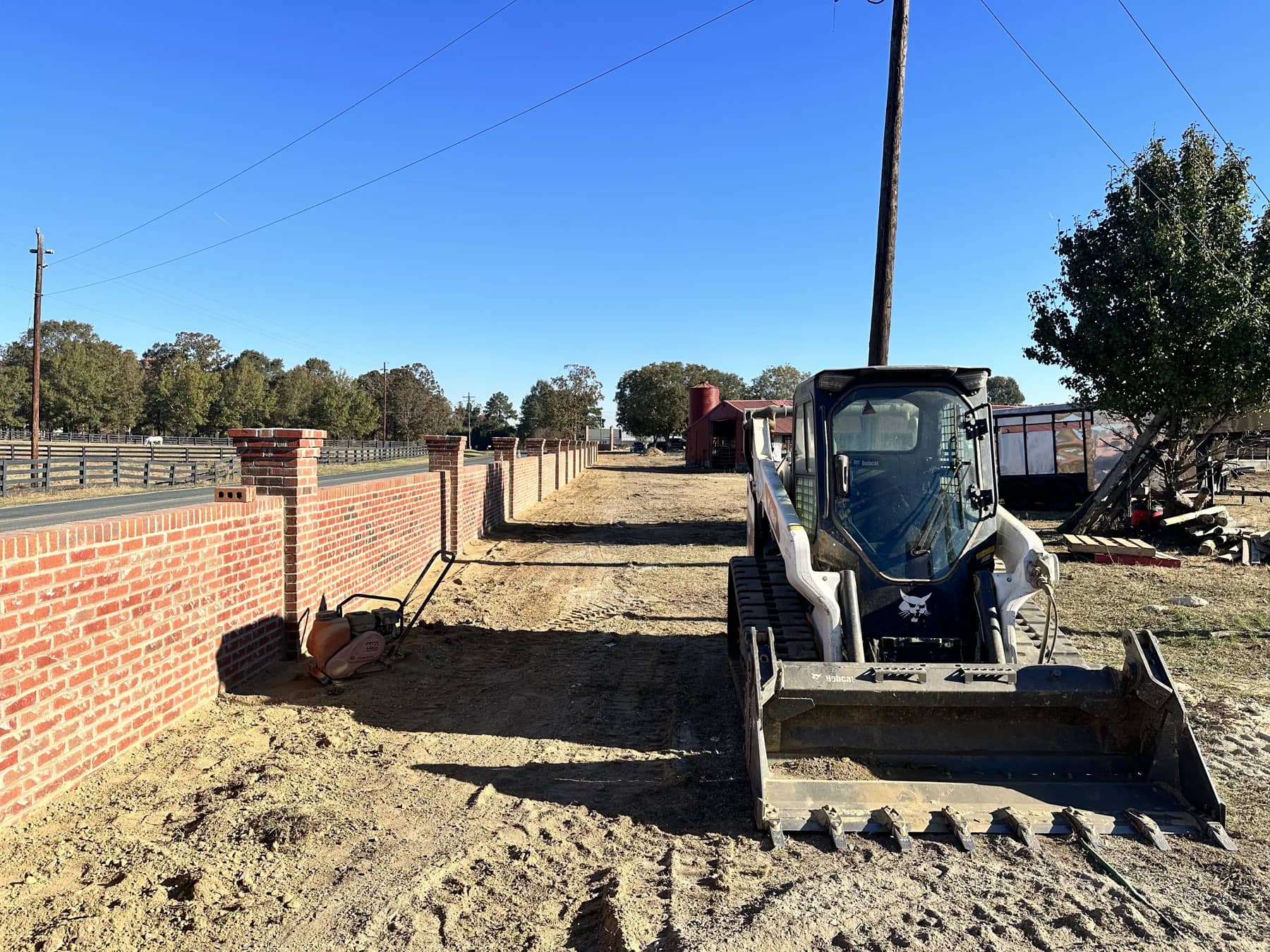
Skid steer on an exposed work site with freshly worked ground
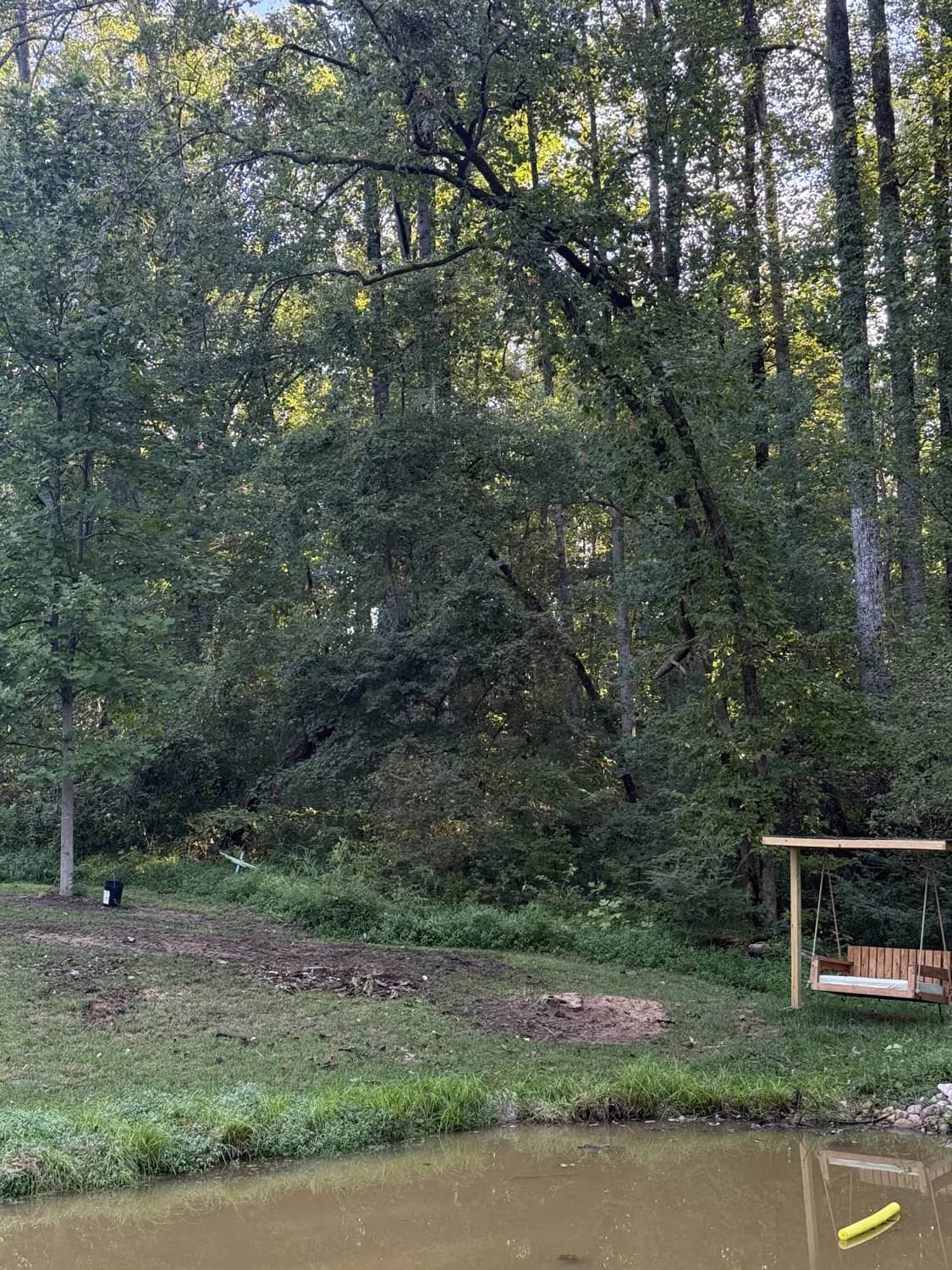
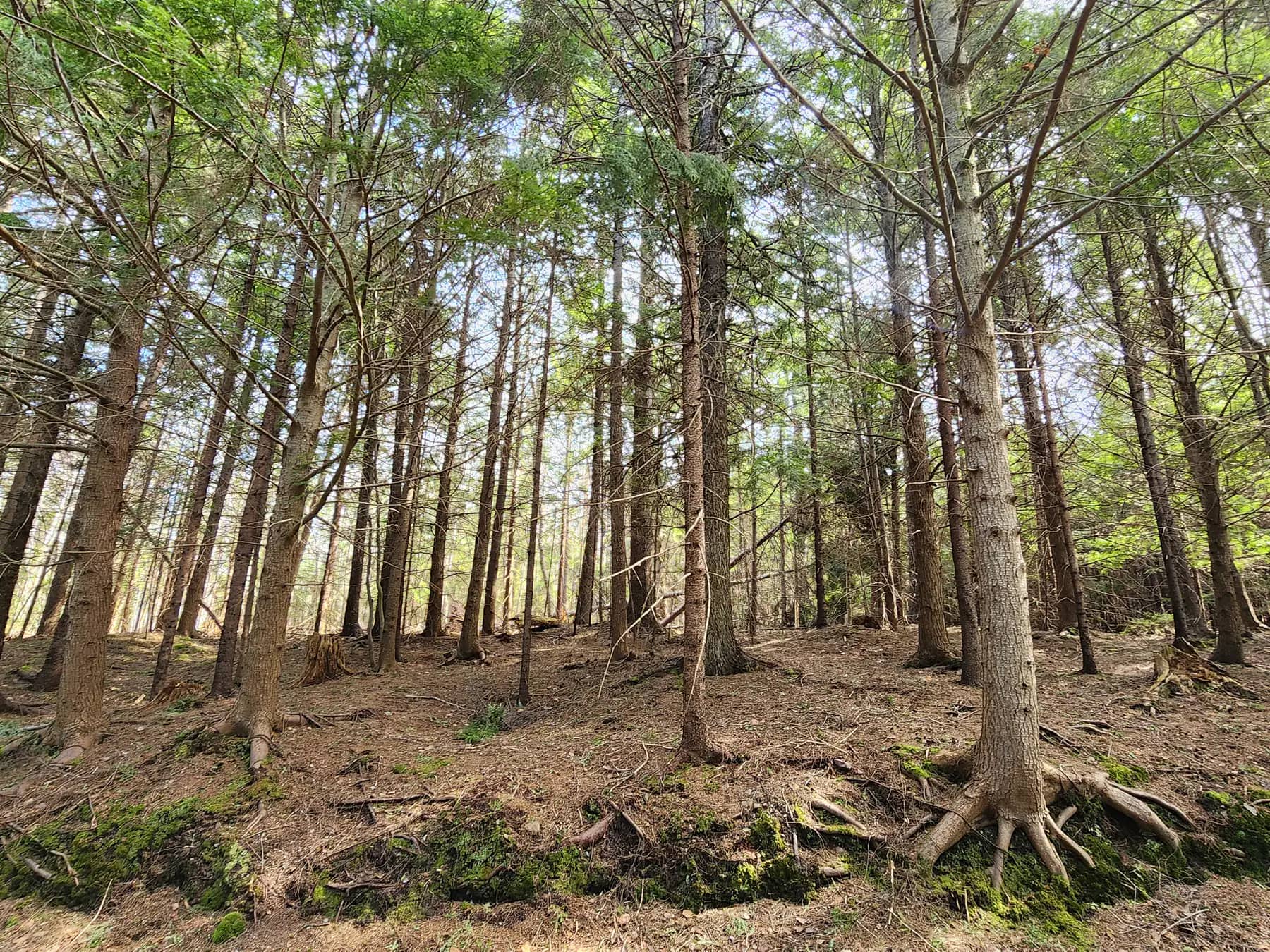
Overgrown wooded lot with dense understory and standing trees, the kind of ground forestry mulching opens up
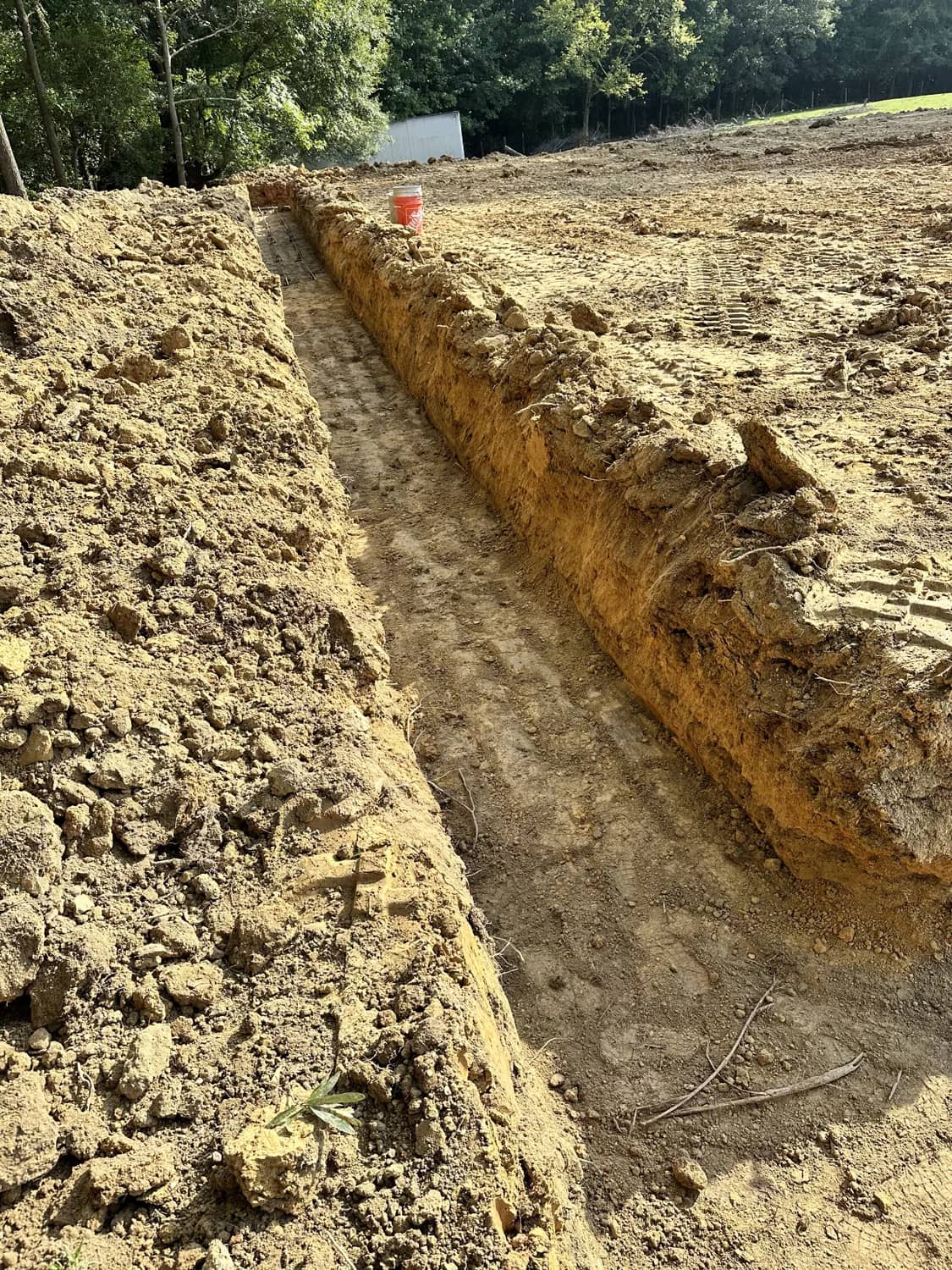
Trench excavation cut across a prepared dirt site
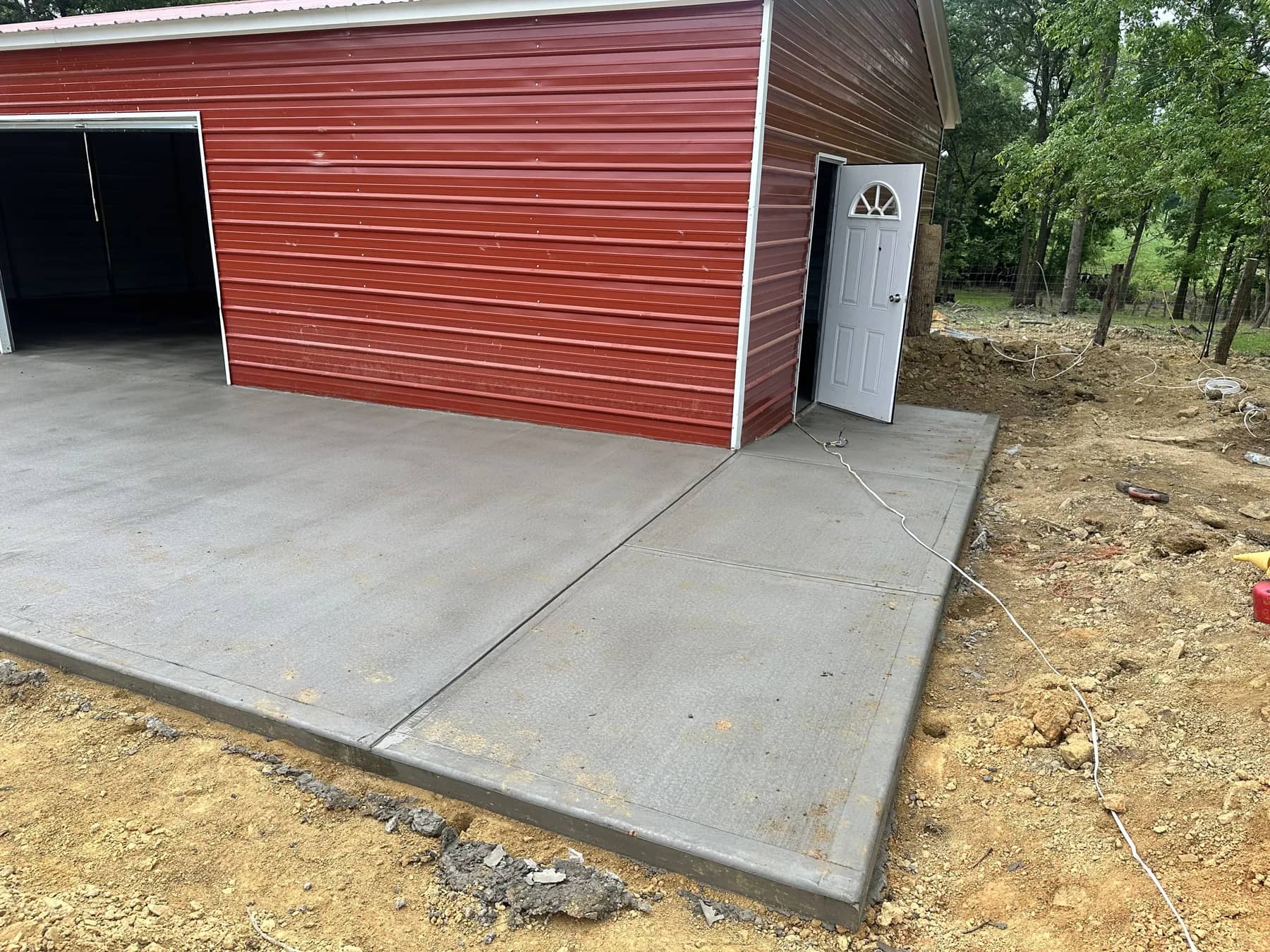
Driveway preparation: concrete apron beside a red outbuilding and graded open ground
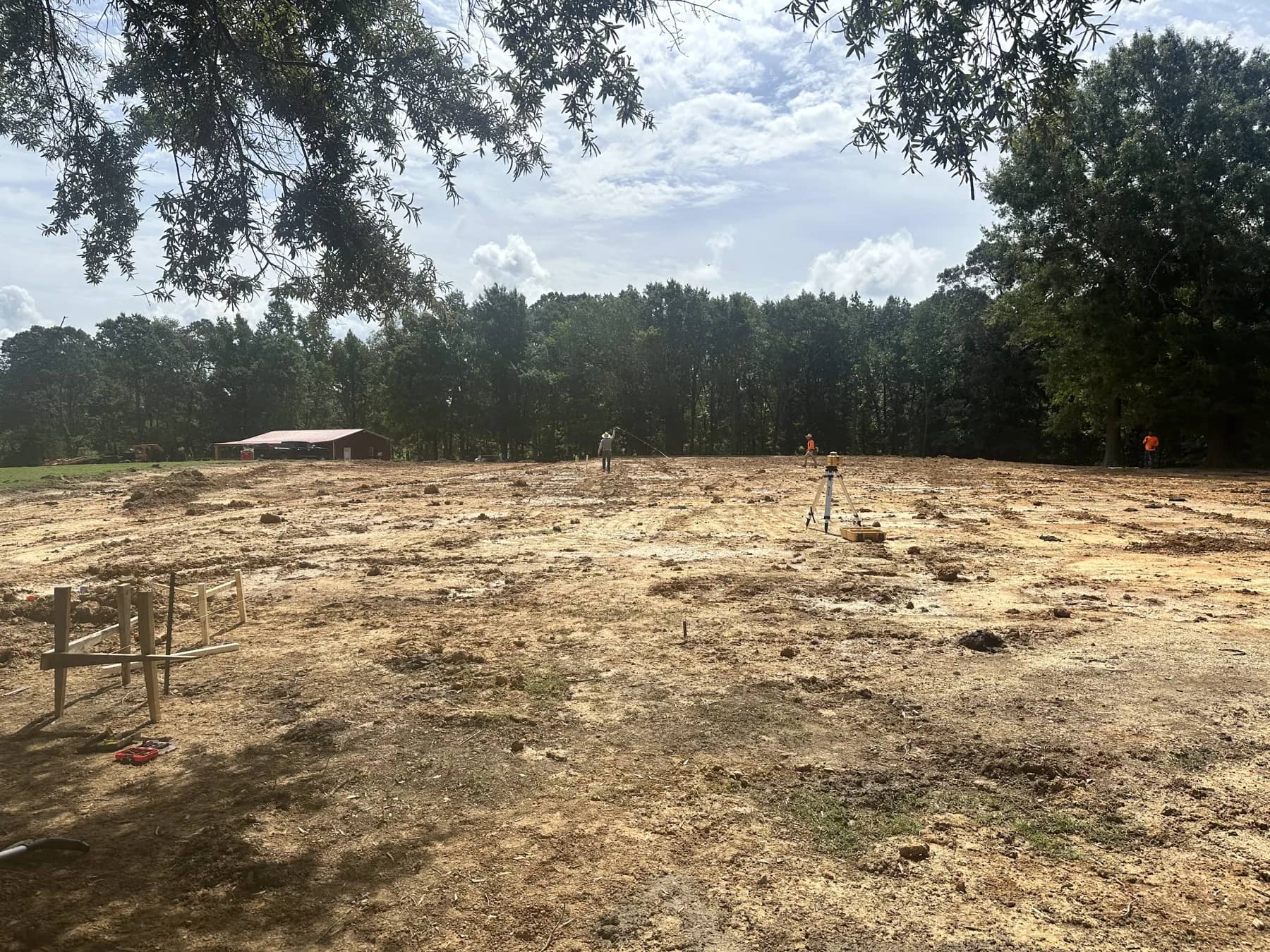
Graded open property bordered by a mature tree line, ready for the next stage of site work
03 / 5

Serving Charlotte and the Surrounding Area

Forestry mulching fits the way land is used around Charlotte. In Waxhaw and Weddington, it opens up overgrown pasture and paddock edges on horse and hobby-farm properties. In Mint Hill, Matthews, and the wooded corners of Ballantyne and Steele Creek, homeowners use it to reclaim back lots that have turned into thickets. Farther east along US-74, around Monroe, Wingate, and Marshville, it clears fence lines and field edges that have been lost to cedar and briars. ETG Landwork, a Wingate-based land clearing and site work contractor, reaches the whole region via the Monroe Expressway and I-485.

Local conditions are a big part of why mulching works so well here. Piedmont red clay erodes quickly when it’s stripped bare, and summer thunderstorms can cut gullies into a freshly cleared slope in one afternoon. Leaving a mulch mat on the ground keeps soil in place on hillsides and near creeks, which is exactly where conventional clearing tends to cause problems. It’s also well suited to cutting walking trails and access paths on large properties, much like the natural-surface trails you’ll find around Reedy Creek Nature Preserve.

04 / 5

Why Charlotte Landowners Choose ETG Landwork for Forestry Mulching

The biggest advantage of mulching is what you don’t have to deal with afterward. Traditional clearing leaves brush piles, and getting rid of them usually means paying for haul-off or trying to burn. The North Carolina open burning rules require land-clearing burn piles to be at least 500 feet from occupied structures and only allow burning on Code Green or Code Yellow air-quality days. That rules out burning on most residential parcels around Charlotte. Mulching sidesteps the problem entirely, because the material becomes ground cover.

Mulching also keeps your soil where it belongs. Because the root systems and a mulch layer stay in place, it’s generally a lower-risk option near property lines and waterways than stripping the ground bare. If your project will disturb more than an acre of soil, state law requires an approved erosion and sedimentation control plan, as the NC Department of Environmental Quality explains, and we’ll help you figure out early whether that applies.

With ETG Landwork, the person who quotes your job is the person running the mulcher. Luis learned machine work over about three years of clearing and grading on a working farm before founding the company in 2026, and he’s upfront about when mulching is the right call and when it isn’t. Learn more about Luis and ETG Landwork. Estimates are always free.

Good questions

Forestry Mulching FAQs

Forestry mulching is a one-step clearing method in which a machine with a toothed, spinning drum grinds standing brush and small trees into mulch and spreads it across the ground. It replaces the separate cutting, piling, hauling, and burning steps of traditional land clearing.

Prefer to talk it through? Call (980) 328-5311

Let’s get moving

Get Your Land Back

If there’s acreage you’ve written off because it’s too overgrown to use, a site walk is the first step. Request a free forestry mulching estimate, and Luis will come see the property in person.

Call nowFree estimate