Services

Trenching Services in Wingate, NC

A new water line to the barn, power to a detached shop, a French drain for a soggy yard: they all start with a clean trench dug to the right depth, in the right place, without hitting what’s already buried. ETG Landwork provides trenching services in Charlotte and across Union County for homeowners, contractors, and farm properties. We dig for water lines, drainage pipe, electrical conduit, and footings, and backfill and compact when the pipe or conduit is in. Owner Luis Gallardo has dug footings and trenches alongside concrete crews and runs every job himself. Call for a free estimate.

  • Free Estimates
  • Owner-Operated
  • Residential & Commercial Projects
01 / 6

Signs You Need Trench Excavation

Hand-digging a long trench through red clay is slow, and a trench dug to the wrong depth or slope causes problems later. Common reasons to call:

  • You’re running water to a barn, garden, shop, or livestock trough.
  • An electrician needs a trench for conduit to a detached garage, shop, or gate.
  • Your yard stays soggy and needs a French drain or drainage pipe.
  • Downspouts need to be piped away from the foundation.
  • A builder or concrete crew needs footings dug.
02 / 6

What Trench Excavation Actually Involves

Trench excavation is digging a long, narrow cut to a set depth and width for pipe, conduit, cable, or footings, then backfilling it once the line is in. It always starts with a utility locate, because trenches cross the same ground where power, gas, water, and fiber already run. In North Carolina, NC 811 asks for notice three working days before digging, and the utilities mark their lines at no charge. Private lines, like a power feed from your house to a well pump, aren’t marked by 811, so we ask about them before digging. The trench is laid out with paint or stakes, then dug with an excavator or a trencher attachment depending on depth, width, and soil. Spoil is kept back from the edge, and for drainage lines the bottom is graded to a consistent slope so water keeps moving. Bedding material goes down where the pipe calls for it, the line is installed by you or your trade, and the trench is backfilled in layers and compacted so it doesn’t sink into a rut later. Federal safety rules require protective systems for trenches 5 feet or deeper, according to OSHA’s trenching and excavation guidance.

03 / 6

Our Trenching Process

  1. Step 1: Map the Route

    Luis walks the trench route with you, marks start and end points, and talks through depth, width, and what’s going in the trench. For drainage, he checks where the water will discharge and the fall along the route. You get a written estimate by trench length and depth.

  2. Step 2: Utility Locate

    We request an NC 811 locate at least three working days ahead and ask about any private lines the utilities won’t mark. Marked lines near the route are exposed carefully by hand where needed.

  3. Step 3: Dig to Depth and Grade

    The trench is dug to the depth and width the line requires, with spoil kept back from the edge. Drainage trenches get a consistent slope checked along the run.

  4. Step 4: Install, Backfill, and Compact

    Once the pipe or conduit is in and inspected if required, the trench is backfilled in layers and compacted. Topsoil goes back on top so the route can be seeded.

  5. Step 5: Final Walk

    You walk the finished route with Luis to confirm the line’s location and that the ground is restored. We can note the route so you know where the line runs in the future.

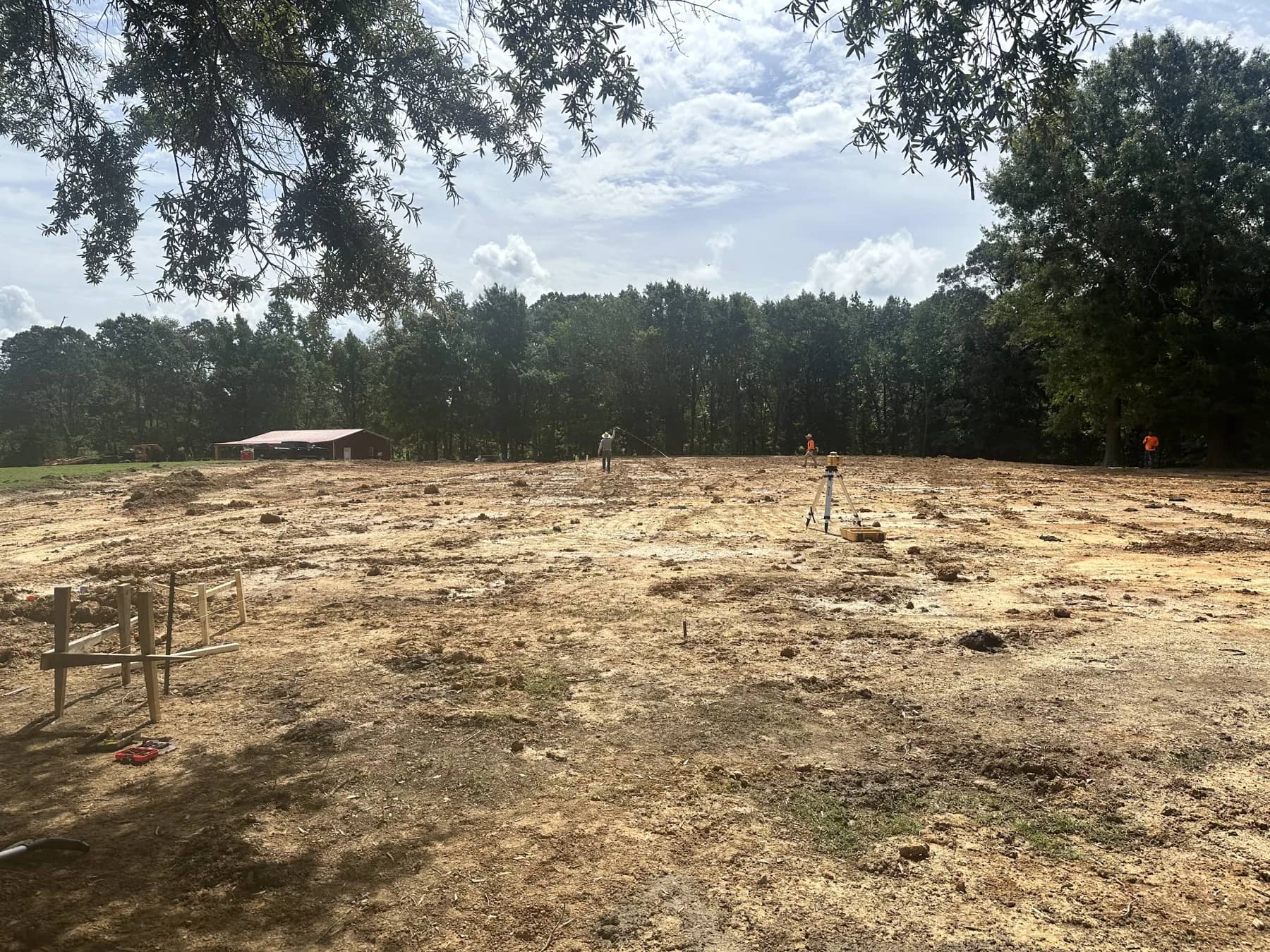
Land clearing result: open, graded acreage with exposed soil and mature trees left standing
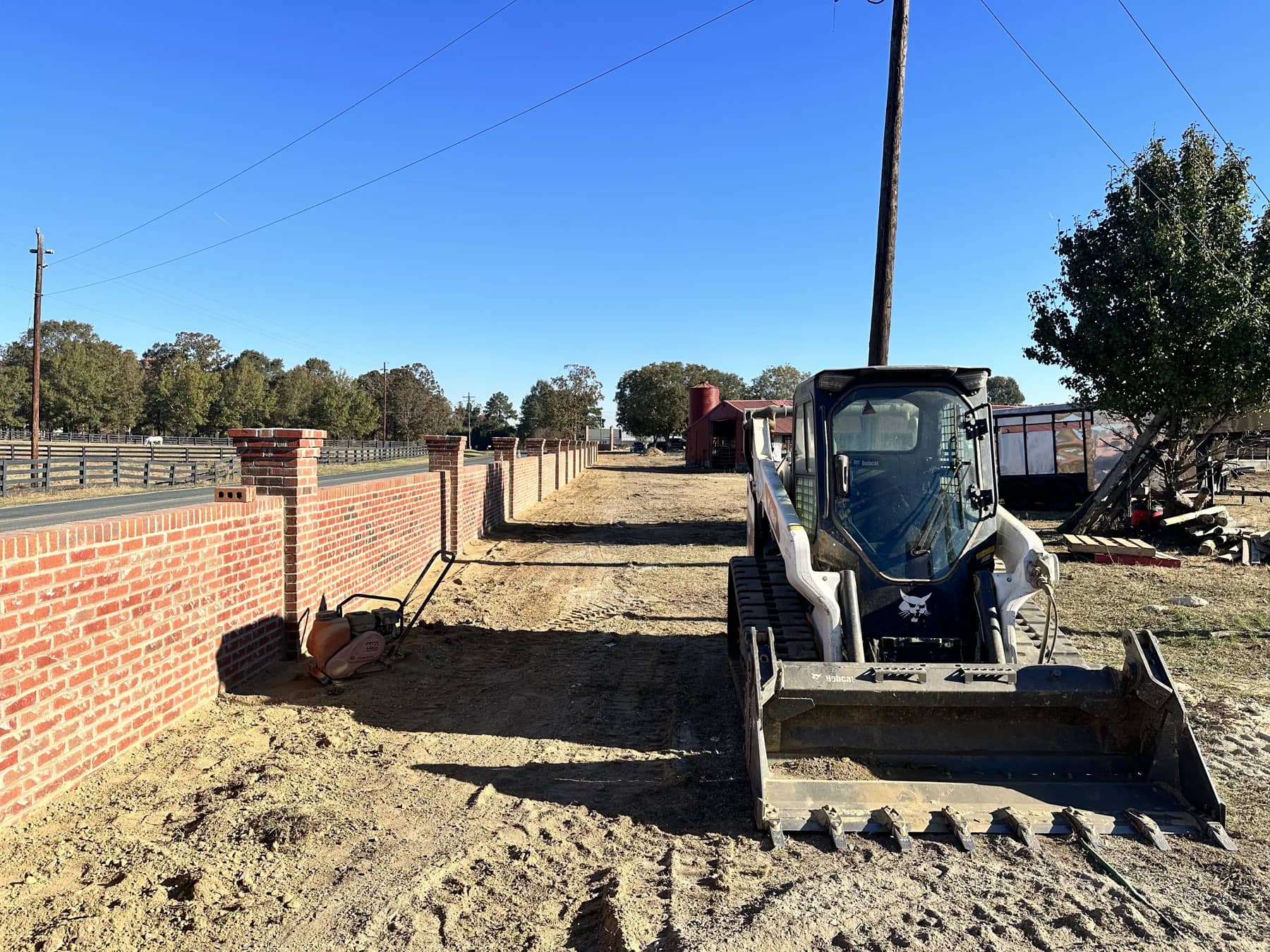
Skid steer on an exposed work site with freshly worked ground
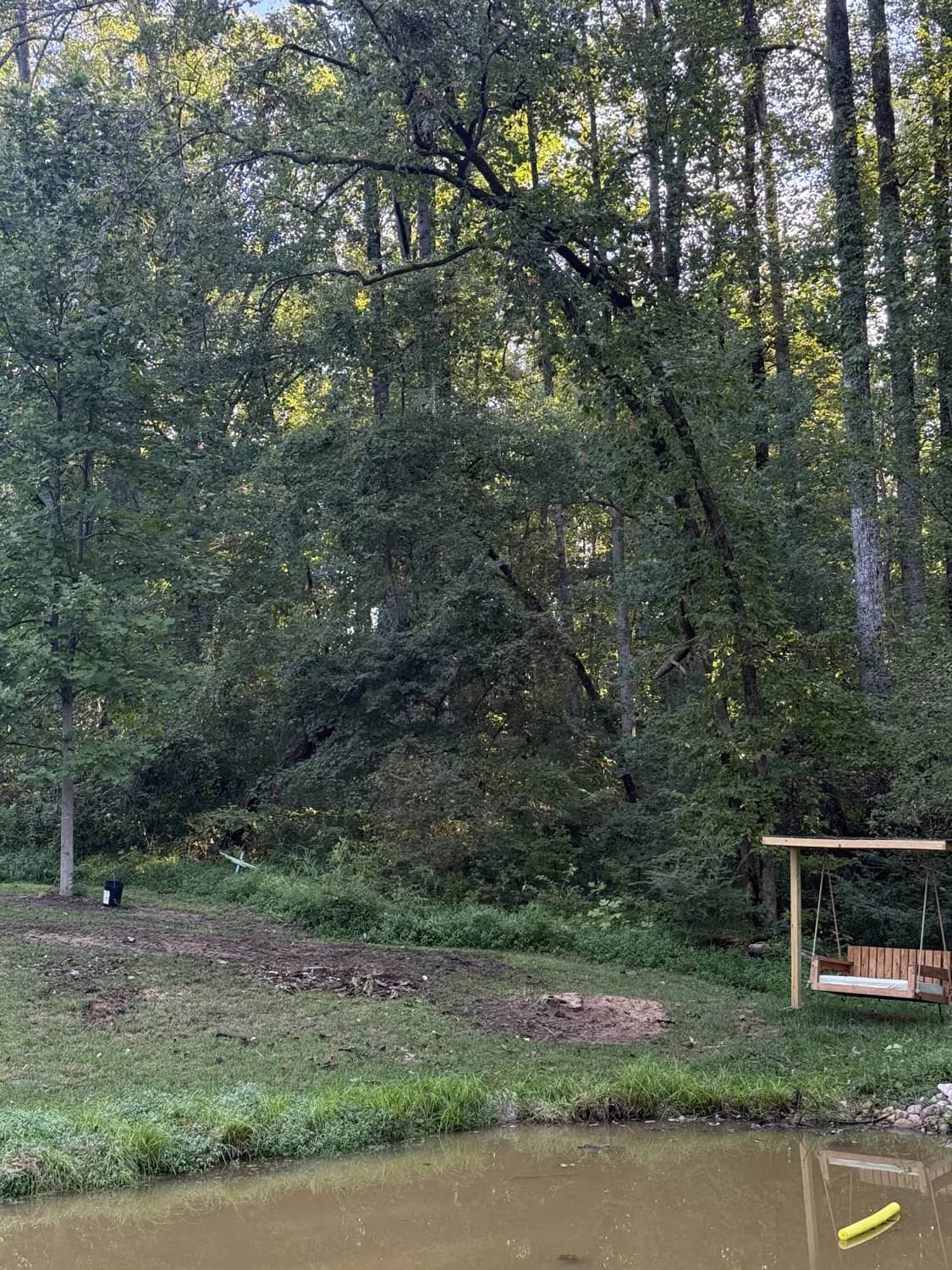
Overgrown wooded lot with dense understory and standing trees, the kind of ground forestry mulching opens up
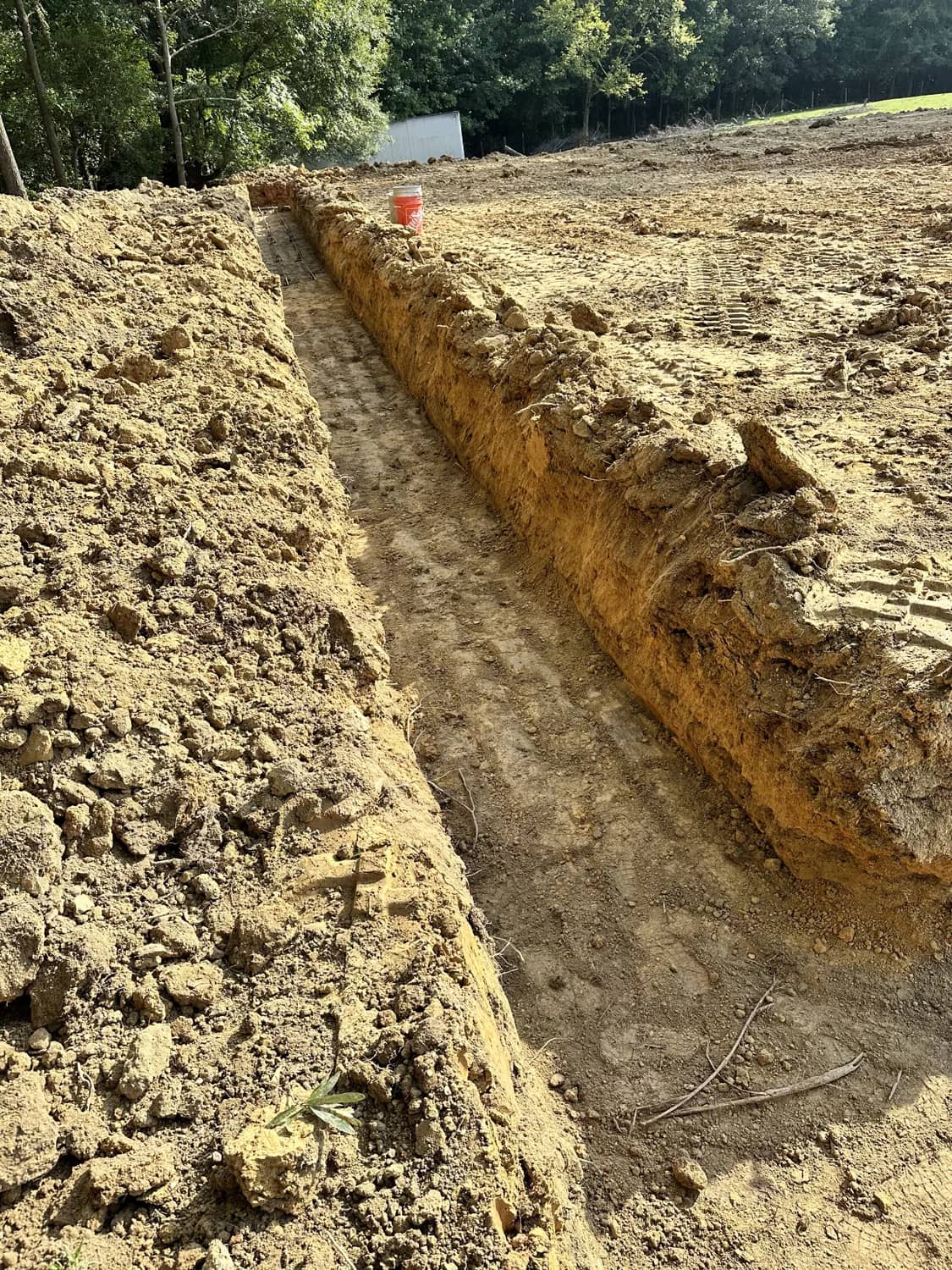
Trench excavation cut across a prepared dirt site
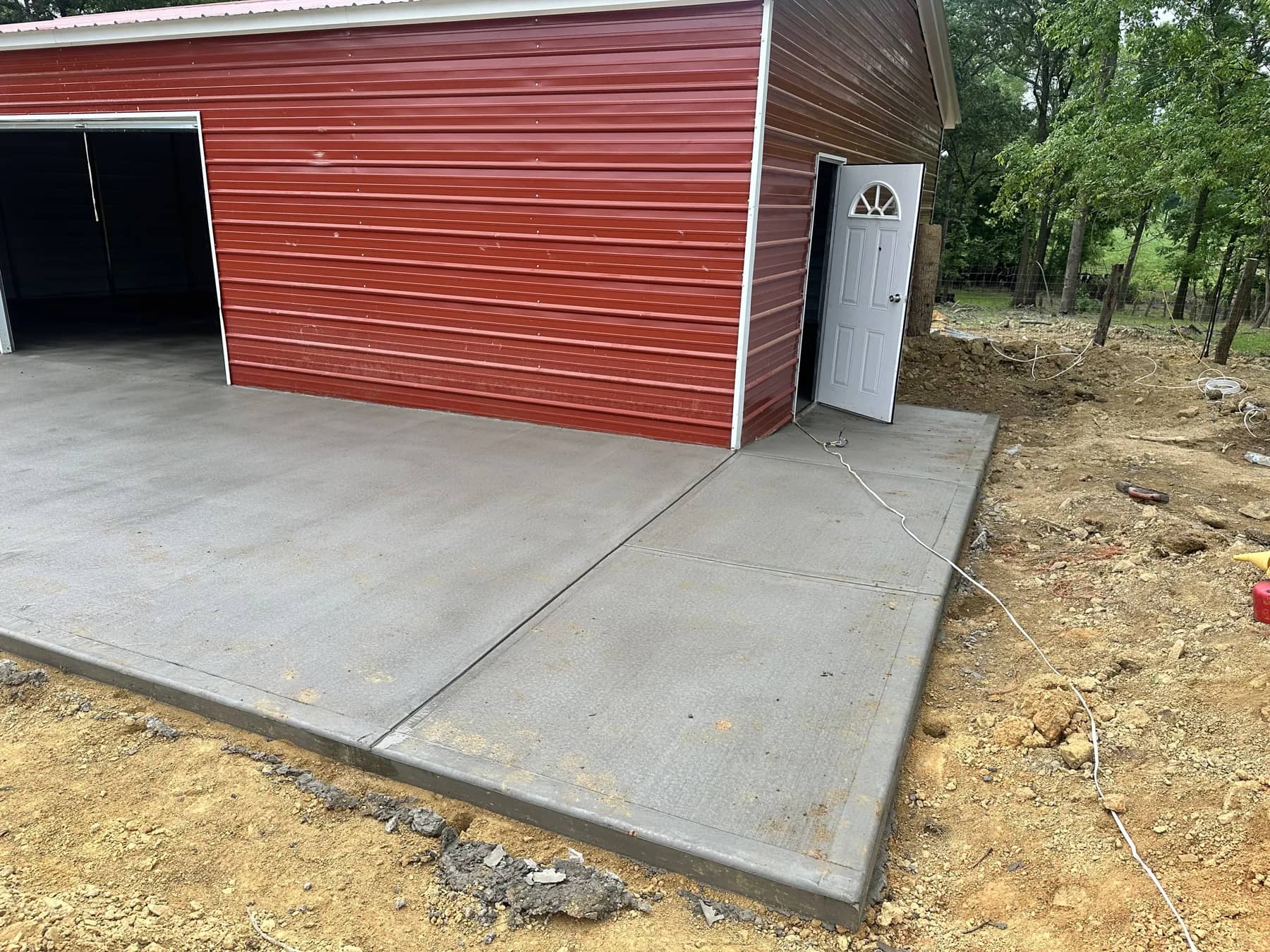
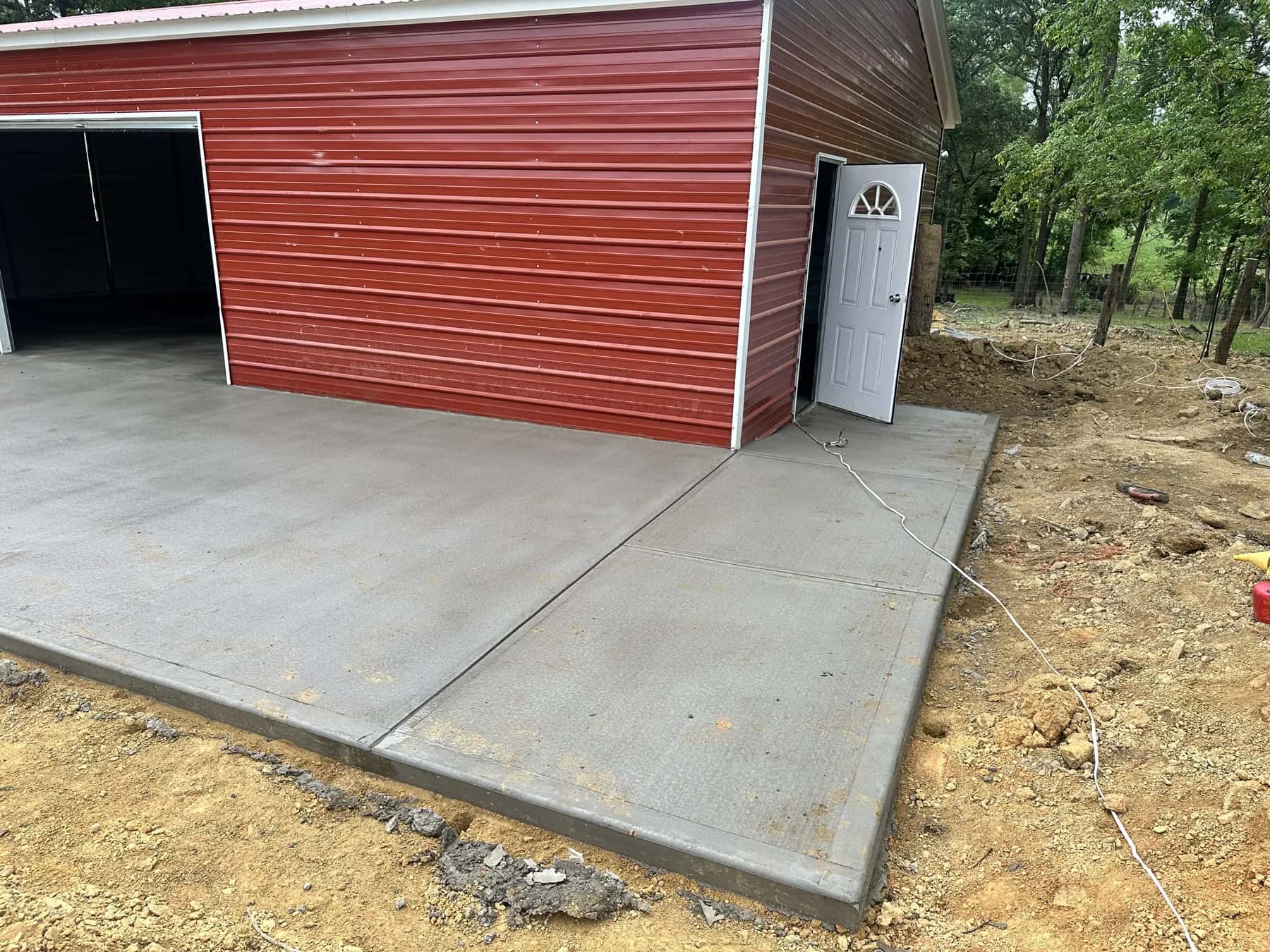
Driveway preparation: concrete apron beside a red outbuilding and graded open ground
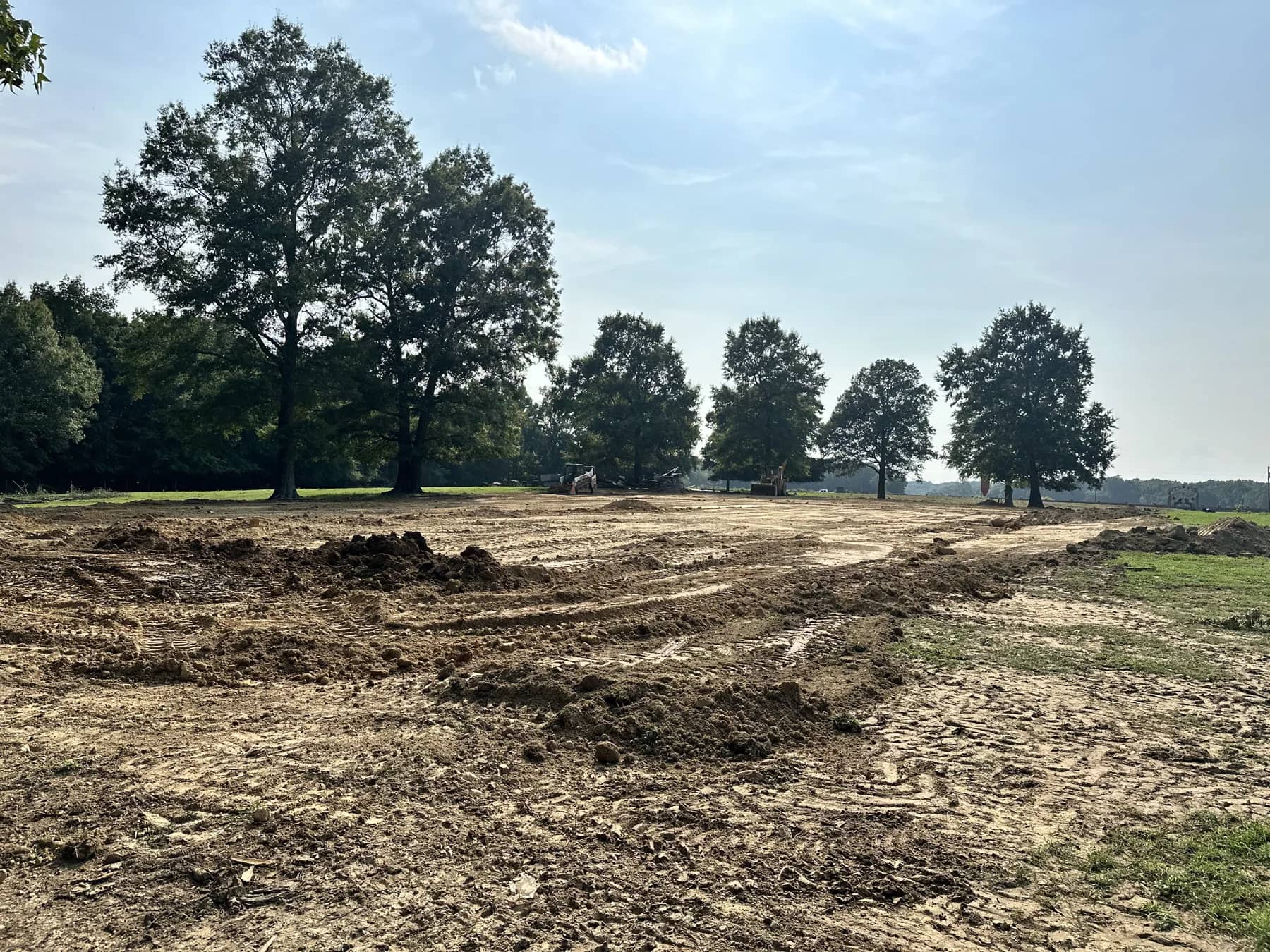
Graded open property bordered by a mature tree line, ready for the next stage of site work
04 / 6

Trenching Across Charlotte and Union County

ETG Landwork, a Wingate-based site work contractor digs trenches across Monroe, Wingate, Marshville, Indian Trail, Stallings, Matthews, Mint Hill, Waxhaw, and Weddington, and into Charlotte via US-74 and I-485. Rural properties in eastern Union County make up a lot of the work, including water lines to barns and pastures and power to outbuildings, along with drainage fixes on suburban lots.

Ground conditions here shape every trench. Red clay digs cleanly but holds water, so drainage trenches need careful slope and the right backfill. In parts of Union County, Carolina Slate Belt rock can sit close to the surface and slow progress or change the route.

05 / 6

Why Charlotte Property Owners Choose ETG Landwork for Trenching

Luis Gallardo learned grading, clearing, and excavation over about three years on a working farm, running skid steers, excavators, and a dozer, before he started ETG Landwork in July 2026. He has dug footings and trenches for concrete crews, so he digs to the specs the next trade needs. You can learn more about Luis and ETG Landwork. Trenching often comes with other earthwork, and ETG also handles site preparation and driveway preparation, so water lines and culverts can be done in the same visit. Estimates are free.

Good questions

Trenching FAQs

Trenching is usually priced by length and depth, then adjusted for soil and rock, access, the number of utilities to cross, and whether backfill and compaction are included. We give a written estimate after walking the route.

Prefer to talk it through? Call (980) 328-5311

Let’s get moving

Let’s Get Your Line in the Ground

Tell us what’s going in the trench and where it needs to run. Call or request a free trenching estimate, and Luis will walk the route with you.

Call nowFree estimate