Services

House Pad Construction in Wingate, NC

A house pad is the compacted, graded platform your foundation sits on, and it’s the one part of your home nobody sees once the slab is poured. ETG Landwork provides house pad construction in Charlotte and Union County for homeowners, builders, and owner-builders, with soft soil removed, fill compacted in lifts, and the pad set at the right elevation so water drains away from the house. From new homesites in Waxhaw and Indian Trail to rural lots around Monroe and Wingate, owner Luis Gallardo builds the pad your foundation crew needs. Call for a free estimate.

  • Free Estimates
  • Owner-Operated
  • Residential & Commercial Projects
01 / 6

Signs You Need a House Pad Built

A pad that’s built wrong doesn’t show it right away. It shows up a year or two later as cracked slabs, sticking doors, and water against the foundation. You likely need a pad built if:

  • Your lot is cleared and your builder needs a level platform before footings.
  • The building area slopes, and the house has to sit above the surrounding grade.
  • The lot is low or wet, and the finished floor needs to be raised.
  • You’re placing a modular or manufactured home that needs a prepared, compacted base.
  • Old stumps, roots, or loose fill sit where the house will go.
02 / 6

What House Pad Construction Actually Involves

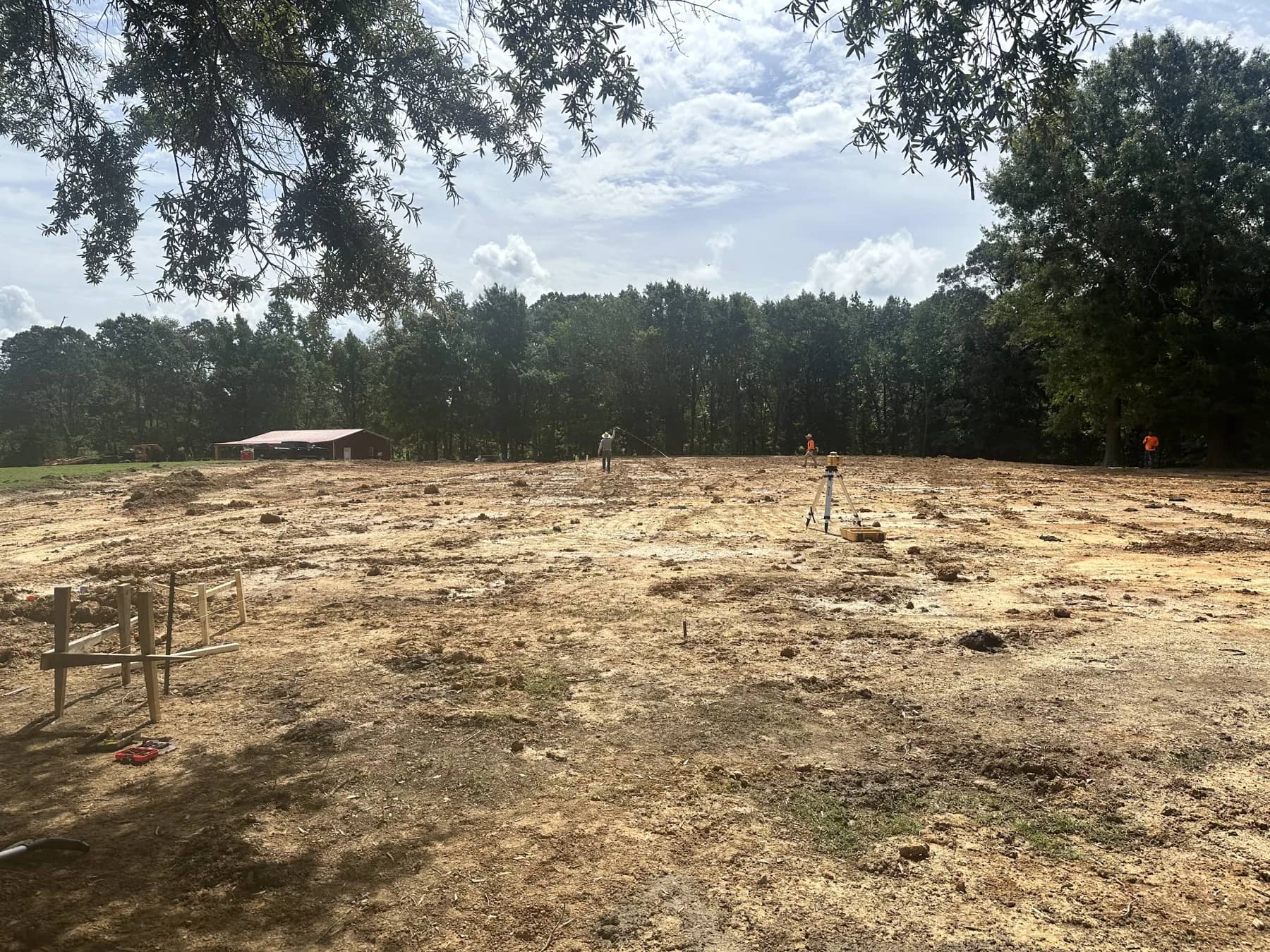
Building a house pad means creating a stable, level base at a specific elevation, usually a little above the surrounding ground so water runs away from the home. The work starts by staking the house footprint and the pad’s working margin from your plot plan. Topsoil and any organic material are stripped off, because organic soil keeps compressing for years. The exposed subgrade is checked for soft spots, which get dug out and replaced. Fill dirt, typically a clay-sand mix suited to structural fill, is then placed in thin lifts of several inches at a time, and each lift is compacted before the next goes down. The pad is built a few feet wider than the foundation so footings have firm soil at the edges, and its sides are sloped and stabilized so they don’t wash out. The finished surface is graded so the ground falls away from the house; the residential code calls for roughly 6 inches of fall in the first 10 feet from the foundation. If your builder or engineer specifies a compaction standard or density test, we build to that spec.

03 / 6

Our House Pad Process

  1. Step 1: Review the Plot Plan and Elevations

    Luis reviews your plot plan with you, along with the finished floor elevation your builder needs and the foundation type: slab, crawlspace, or basement. He checks the existing grade, drainage, and access for fill trucks. You get a written estimate that separates stripping, fill, and compaction work.

  2. Step 2: Stake, Strip, and Fix Soft Spots

    The footprint and pad margin are staked, topsoil is stripped and stockpiled, and the subgrade is checked. Soft or wet areas are dug out and replaced so the pad isn’t built on a weak spot.

  3. Step 3: Place and Compact Fill in Lifts

    Fill goes down in thin layers, and each one is compacted before the next. This is the step that separates a pad that holds from one that settles, so it doesn’t get rushed.

  4. Step 4: Shape, Slope, and Protect the Pad

    The pad is brought to elevation, the top is graded to drain, and the side slopes are shaped so rain doesn’t erode them. Silt fence or other erosion measures go in where needed.

  5. Step 5: Check Grade and Hand Off

    We check elevations against the plan and walk the pad with you and your builder. Once you sign off, the pad is ready for footings or forms; Luis regularly digs footings for concrete crews, and that work can be added to the scope.

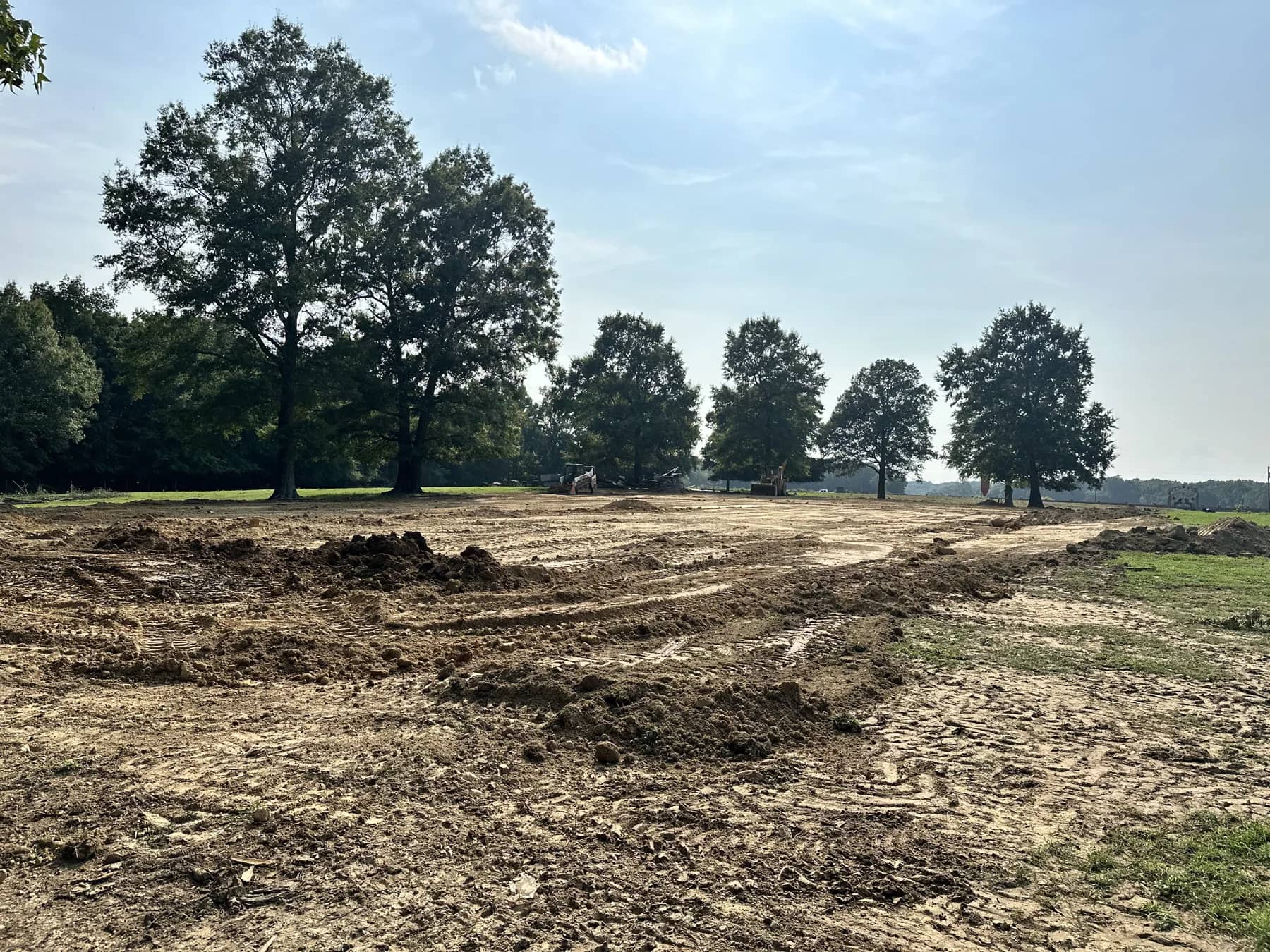
Land clearing result: open, graded acreage with exposed soil and mature trees left standing
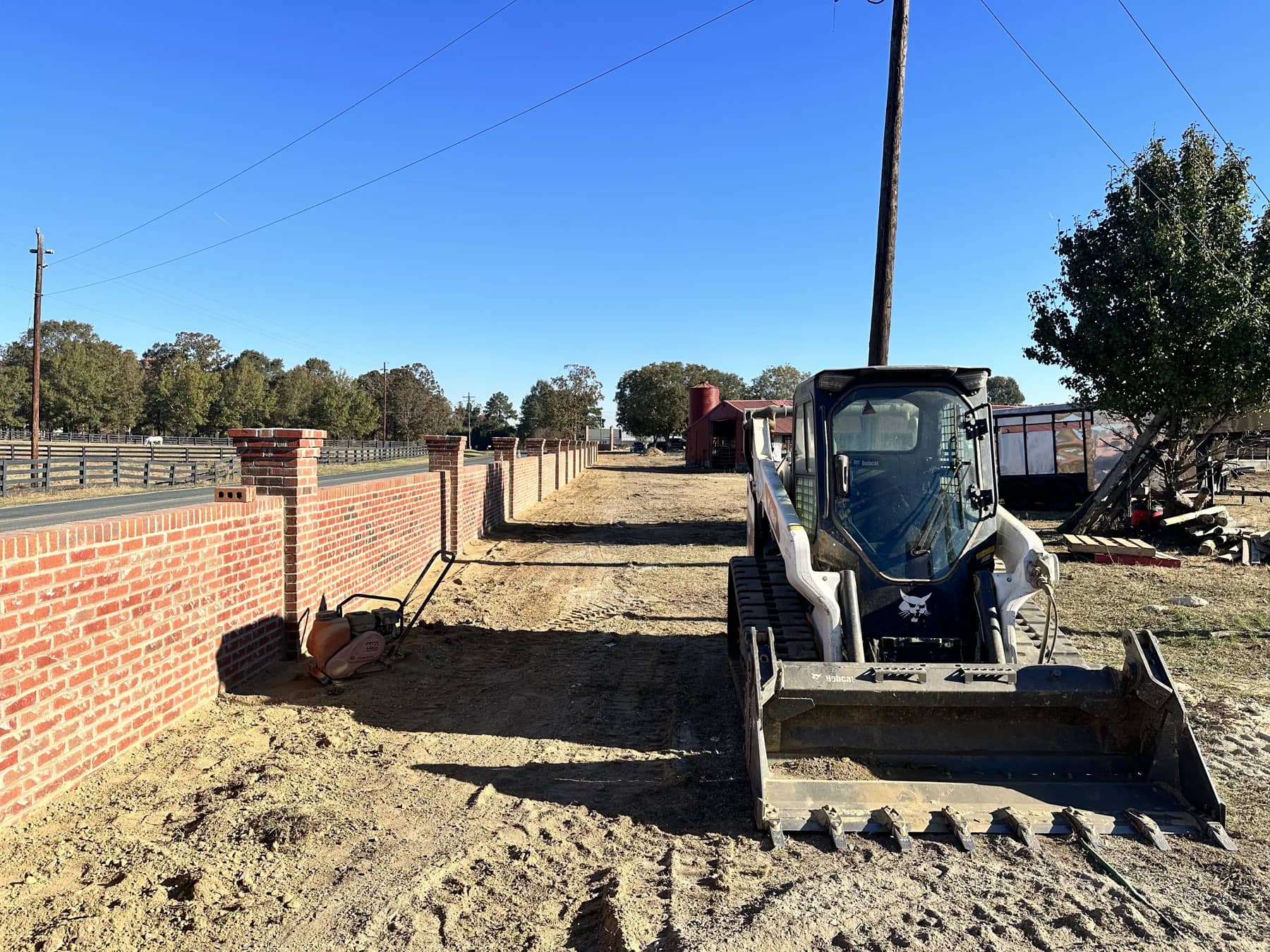
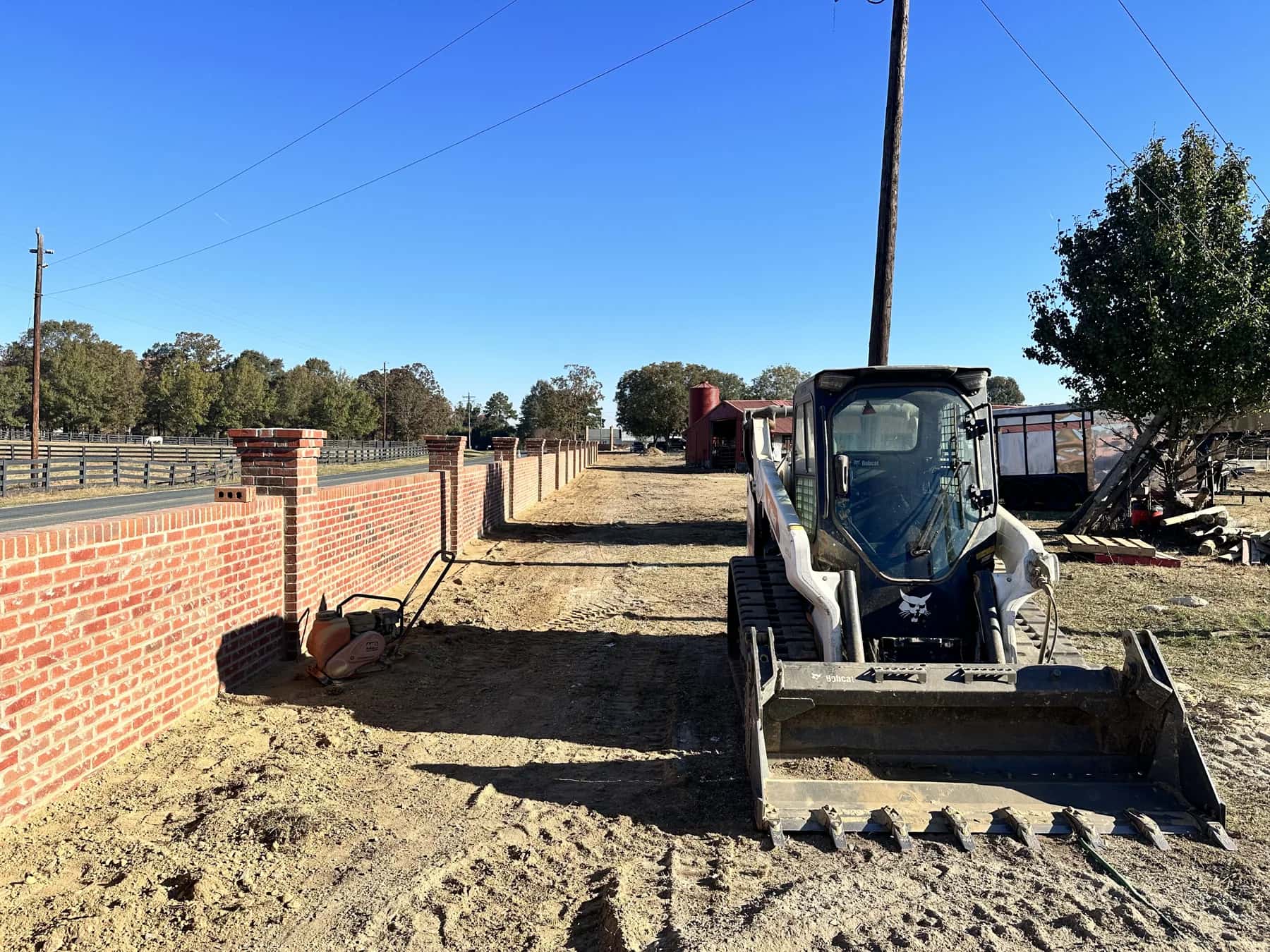
Skid steer on an exposed work site with freshly worked ground
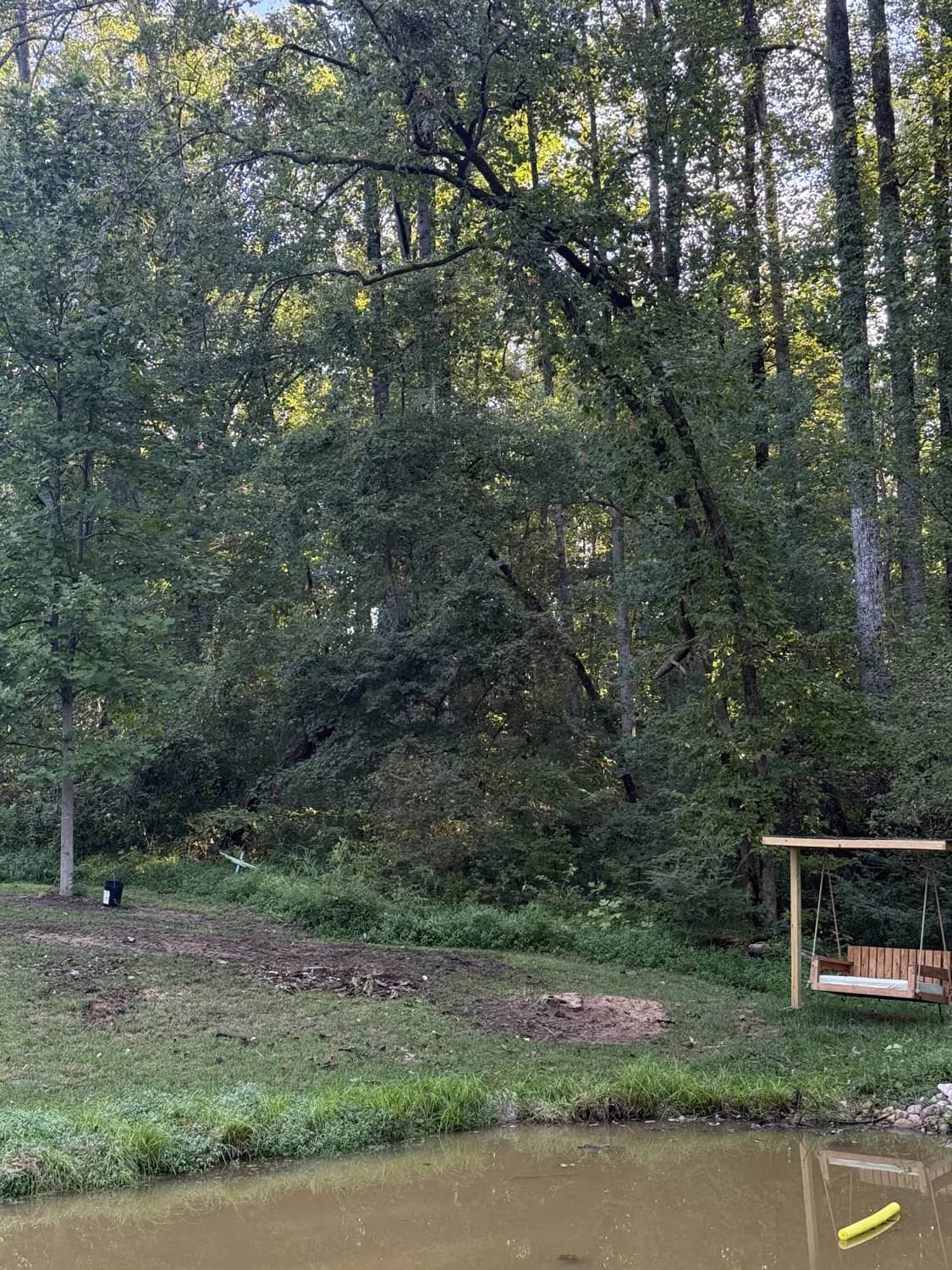
Overgrown wooded lot with dense understory and standing trees, the kind of ground forestry mulching opens up
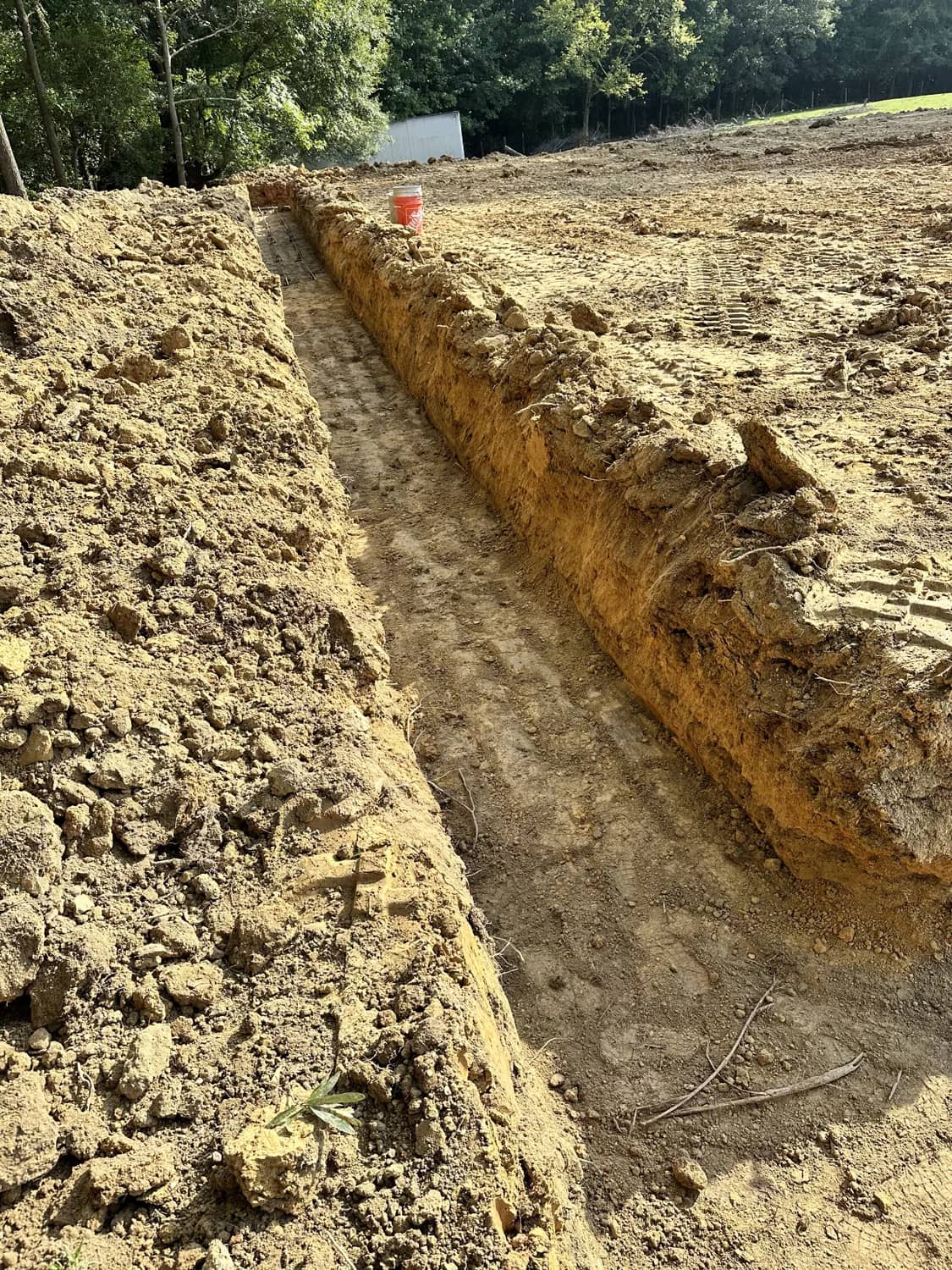
Trench excavation cut across a prepared dirt site
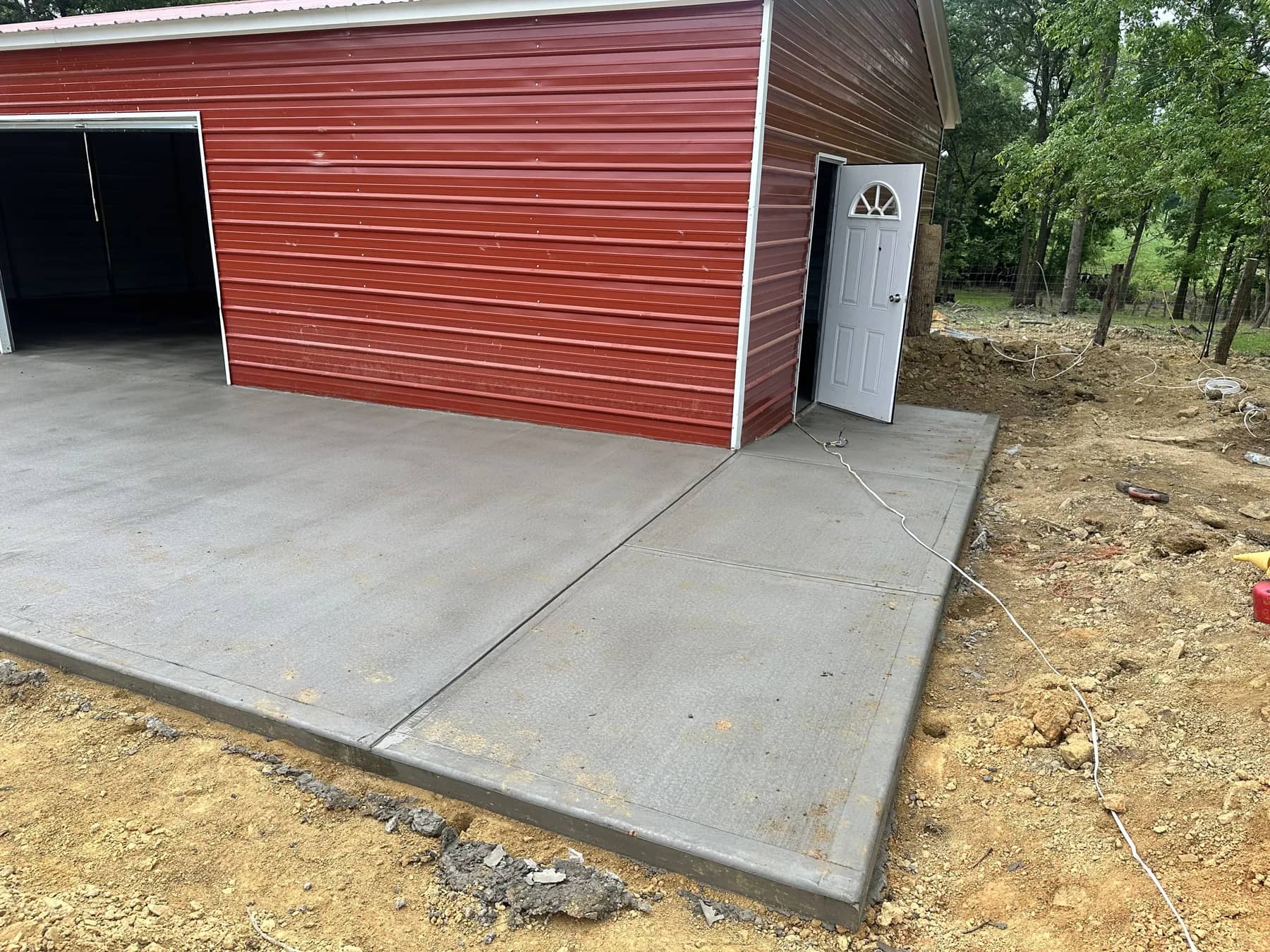
Driveway preparation: concrete apron beside a red outbuilding and graded open ground
Graded open property bordered by a mature tree line, ready for the next stage of site work
04 / 6

House Pads Across Charlotte and Union County

ETG Landwork, a Wingate-based site work contractor builds pads across Monroe, Indian Trail, Stallings, Matthews, Mint Hill, Waxhaw, and Weddington, and into Charlotte via US-74 and I-485. Many of the region’s new homesites are former farm fields and pasture, where the topsoil runs deeper than expected and old fence rows or burn pits can hide under the surface.

Piedmont red clay makes good fill when it’s placed at the right moisture and compacted properly, and poor fill when it’s dumped wet and left. Compacting clay that’s too wet or too dry is how pads end up settling, so we watch the weather and the soil, not just the calendar.

05 / 6

Why Charlotte Homeowners Choose ETG Landwork for House Pads

Luis Gallardo learned grading, clearing, and excavation over about three years on a working farm, running skid steers, excavators, and a dozer, before he started ETG Landwork in July 2026. On a pad job, that means one operator who understands clearing, grading, and the footings that come next. You can get to know Luis and ETG Landwork. If your lot still has trees, ETG handles the lot clearing too, and before any digging we request an NC 811 utility locate three working days ahead. Estimates are free.

Good questions

House Pad FAQs

A house pad is the compacted, level area of soil a home’s foundation is built on. It’s usually raised slightly above the surrounding ground so water drains away from the house, and it extends a few feet past the foundation on all sides.

Prefer to talk it through? Call (980) 328-5311

Let’s get moving

Let’s Build Your Foundation on Solid Ground

Send over your plot plan and let’s look at the lot. Call or request a free house pad estimate, and Luis will meet you on site.

Call nowFree estimate